

Law Firm Link Exchange Turns Out to Not Be Mutual (Shocker)
Reading Time: ~ 12 min
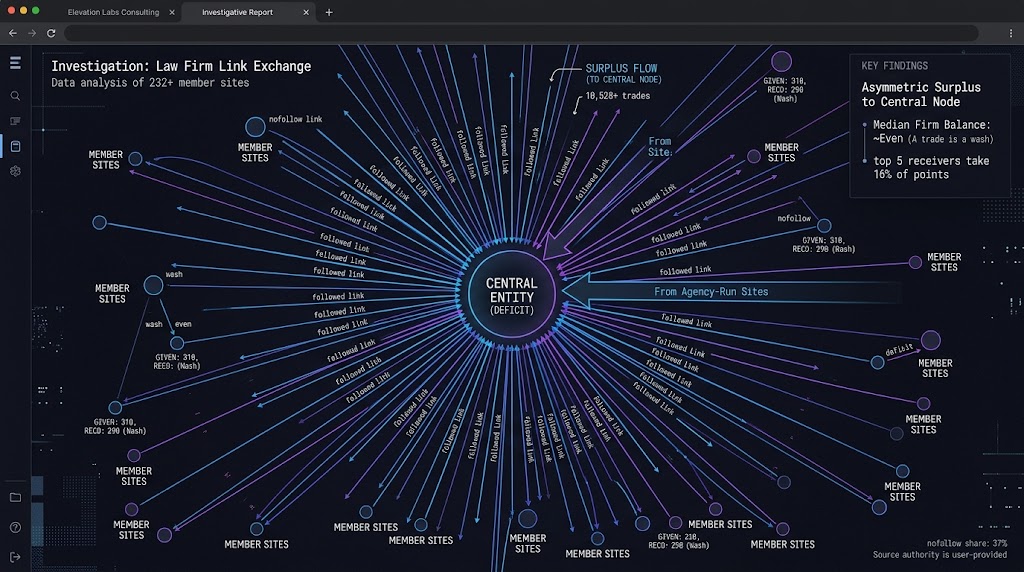
Matador Solutions pitches law firms a co-op where members blog about one another and everyone’s rankings rise together. I pulled the public record on 232+ member sites, 10,528 of the links they trade and 18,185 more from sites the agency runs with no firm behind them. Here is what it shows, how I measured it, and how you can check it yourself.
If you run a law firm you have probably had the email: join a group of firms that link to each other, get links back, rank higher. The version this piece is about comes from Matador Solutions of Santa Monica, which describes itself on its own site as “a co-op of law firms” and says it was “Founded by a personal injury firm.” Its founder and CEO, Wayne Cohen, practices personal injury law in Washington, DC.
I want to be careful about what this piece is. It is not a claim about anyone’s intent. It is a description of what public web pages, public APIs and two commercial SEO databases show about how the links in this network are arranged and where their value goes, with every method written down so anyone can repeat it. Where I offer a reading of the numbers, I say so.
What a link is actually worth
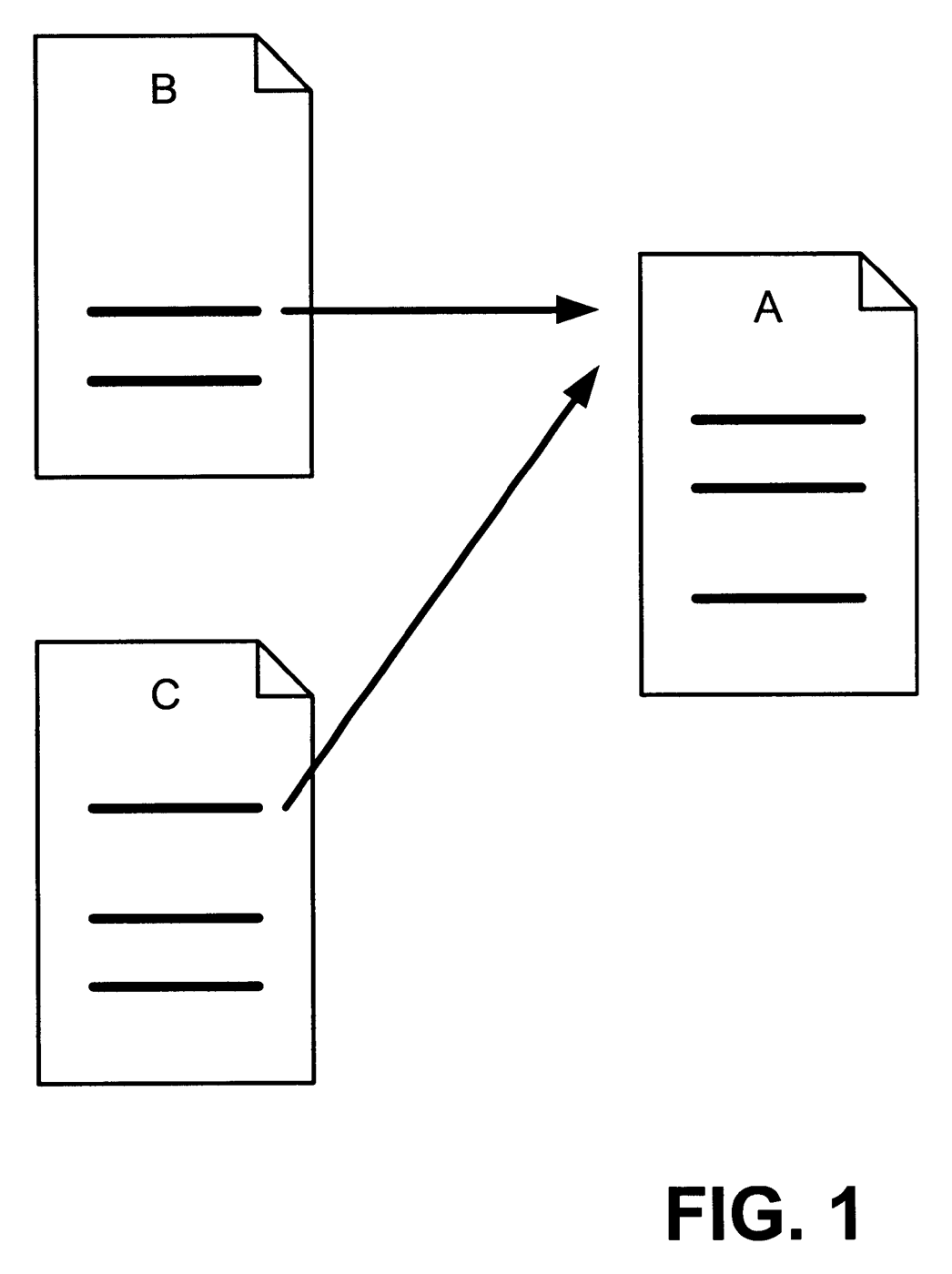
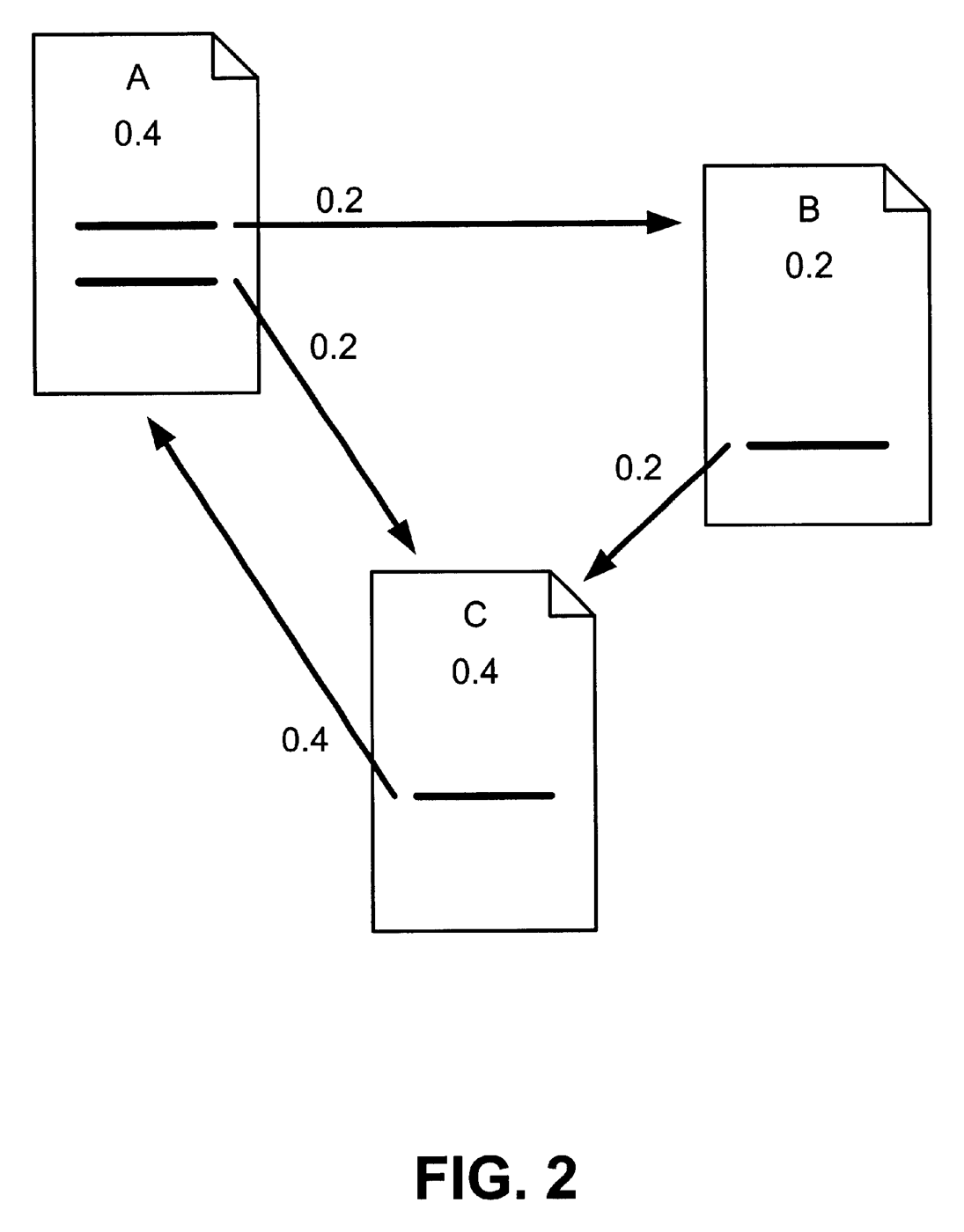
Google’s original ranking idea is in a 1998 patent by Lawrence Page, assigned to Stanford: a page’s importance is the sum of the importance passed to it by the pages linking to it, and each linking page splits what it has evenly across the links on it. Figures 1 and 2 of the patent say it in two drawings.
r(A) = α / N + (1 − α) ( r(B1) / |B1| + … + r(Bn) / |Bn| )
The patent’s rank equation: a page’s rank is a small constant plus a share of the rank of every page B that links to it, divided by |B|, the number of links on B. Brin and Page’s 1998 paper uses the same form with the constant set to 0.15.
Three things follow, and they decide everything below.
- A link from a page nobody links to is worth almost nothing. Its rank is the constant, and that is all it can pass.
- A page that gives few links and receives many accumulates rank. A page that gives many and receives few hands its rank away.
- A link marked
rel="nofollow"passes nothing. Google’s documentation says such links “will generally not be followed.”
Google’s spam policy, in its current wording, lists “Excessive link exchanges (‘Link to me and I’ll link to you’) or partner pages exclusively for the sake of cross-linking” and “links with optimized anchor text in articles, guest posts, or press releases distributed on other sites” among the practices it calls link spam. It also has a named policy for “expired domain abuse.” Keep both in mind.
What the public record shows
Every site in this study was found through public signals: a footer credit reading “Powered by Matador Solutions,” WordPress author accounts named matadoradmin, matadordev, matadorseo or similar that every WordPress site publishes by default, and the links between the sites themselves. Each site’s blog posts were read through the public WordPress API that every WordPress site exposes.
- 232+ member sites found, 187 with the footer credit and 43 more with the agency’s logins but no credit
- 10,528 links between member sites, inside 5,438 blog posts
- 18,185 more links to members from 151 sites with the agency’s logins and no firm behind them
- 37% of the member-to-member links are marked nofollow
The posts follow a template. A member firm’s blog post, usually written under the agency’s author account, mentions another member with “our friends at” and links the firm’s name and a keyword phrase to it:
“Our friends at Cohen & Cohen discuss how this confusion leads many accident victims to misunderstand their coverage and options. A personal injury lawyer can explain which type of claim applies to your situation and what that means for your recovery process.”
From a member firm’s blog post, read October 30, 2026. Highlighted text is linked. 52% of all anchors in the network contain “lawyer” or “attorney”; 23% use the “our friends at” wording.
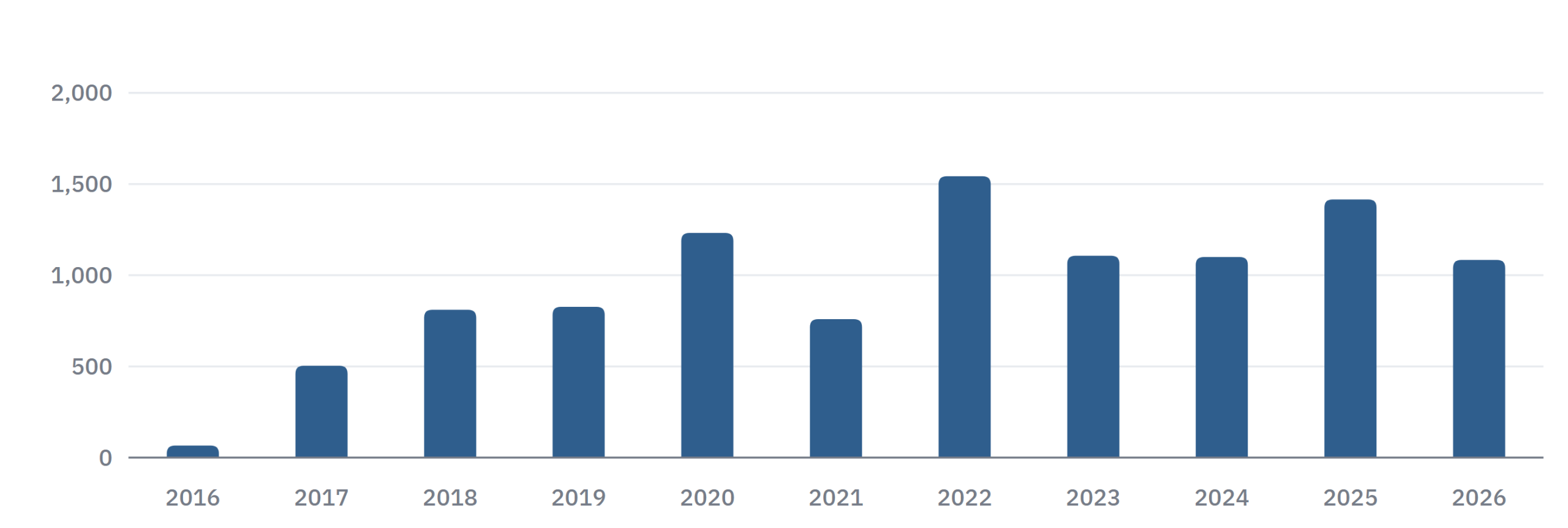
It runs round robin rather than back and forth: A links to B, C links to A. That avoids the plain reciprocal pattern, and it has run at between 750 and 1,500 links a year since 2020.
Where the value goes
Counting links treats every link the same. PageRank does not, so I built a ledger that follows the patent’s rule. Each site gets a value from 0 to 100, half from its authority (the average of Ahrefs Domain Rating and DataForSEO’s backlink rank, two independent public metrics) and half from its Ahrefs organic traffic on a log scale. A followed link on a post passes the linking site’s value divided by the number of outside links on that post, exactly the split in Fig. 2. Nofollow links pass nothing. Add it up and every firm has points given and points received.
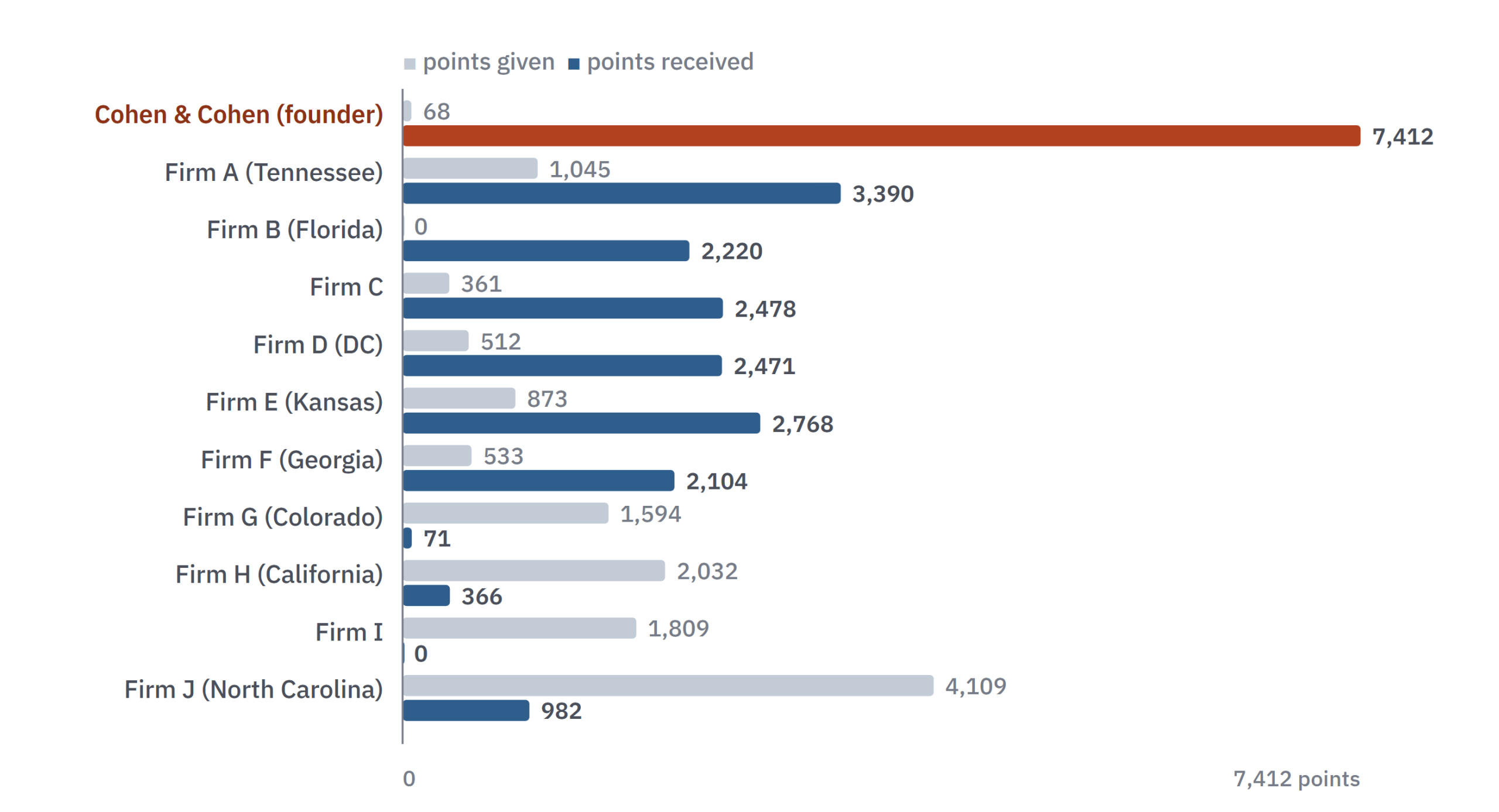
- Cohen & Cohen, the founder’s DC firm, receives 7,412 points and gives 68. It gets back about 109 points for every point it gives. The next firm down gets 20. 158 member sites have linked to it from 211 posts, every year since 2014; 207 of the 442 anchors are phrases like “personal injury lawyer” and “car accident lawyer,” and the givers are mostly in Florida, California, Virginia, Maryland and Illinois.
- A second firm the founder co-owns, Cohen Injury Law Group in Los Angeles (its site names “Nicholas & Wayne Cohen, Founding Partners” and carries the Matador credit), has received 60 followed links from the network since 2023 and given 0.
- The top five receivers take 16% of all the points member firms receive. 86 of 151 firms come out ahead; the median firm’s balance is 47 points, close to even. In my reading that is the shape of the arrangement: for most members the trade is a wash, and the surplus flows to a few, led by the firm that owns the agency.
- Nothing comes in from outside. Of all the points member firms receive, 85% come from other members’ sites and 15% from sites the agency runs. The only authority in the system is what the member firms brought with them.
A full PageRank run on the same graph (damping 0.85, restart weights proportional to site value) gives the same answer: the founder’s firm holds 8.9% of the network’s PageRank against a 0.7% share of its value.
37% of the links pass nothing at all
4,427 of the 11,838 member-to-member links carry rel="nofollow". On the agency-run sites it is 7,787 of 18,185. There is no visible rule to it: of the firms that give 30 or more links, one marks them all nofollow and the rest mix followed and nofollow links, sometimes inside the same post. The followed share was 39% in 2019, 89% in 2023 and 69% so far in 2026. Whoever is paying for these posts is, a third of the time, paying for links that by Google’s own documentation do not count.
The sites nobody reads
Besides the member sites, 151 other sites carry the agency’s author accounts and publish posts that link to members: generic health blogs, “legal information” blogs, podcast and small-business blogs, and award-themed sites. 189 of the domains resolve to two servers that host nothing else, and 23 of them published their first post on the same day, April 4, 2019.
- 0.6 median Ahrefs Domain Rating of the 151 agency-run sites checked
- 128 of 151 have no measurable organic traffic; the busiest gets 45 visits a month
- 0 of this year’s 1,472 links to members came from a site with even 100 monthly visits
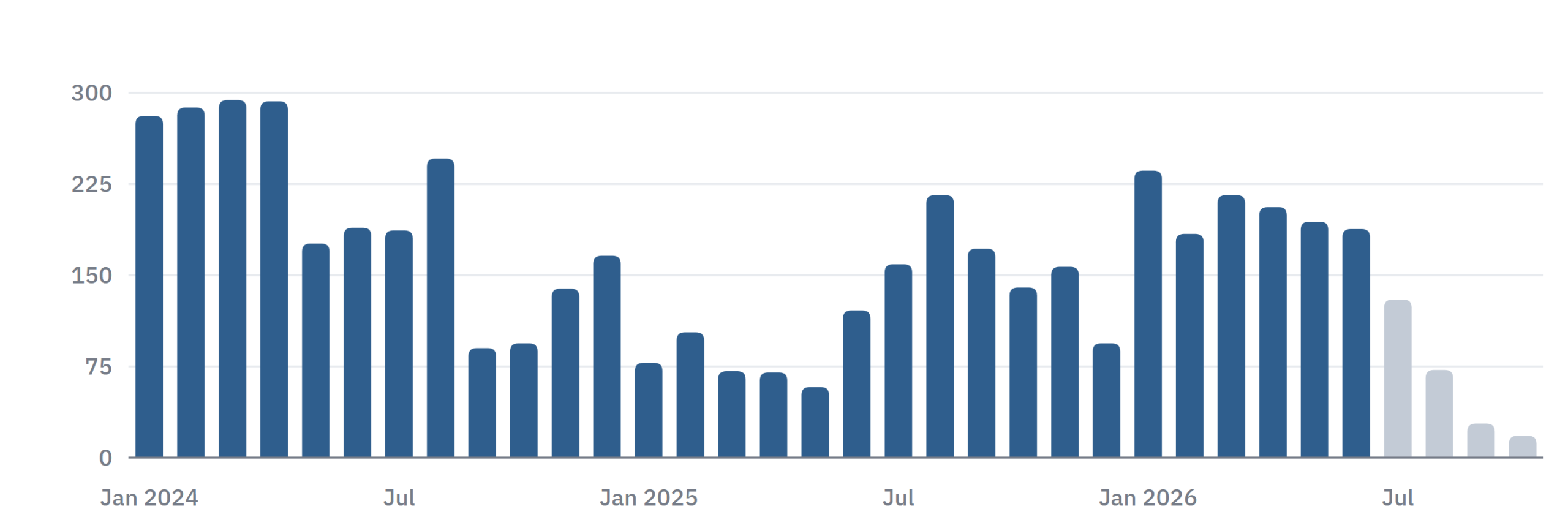
By the patent’s rule these links carry close to nothing. They are still being published, but less and less: links to members ran about 200 a month from March to June 2026, then 72 in August, 28 in September and 18 in October.
Where the domains came from is the part I would want to know about if I were a member. The Wayback Machine shows what 167 of them were before the agency’s posts began. At least 42 were a real law firm, medical practice, business or organization first. nyugloballaw.com once hosted New York University’s Hauser Global Law School Program and now publishes legal posts under the title “NYU Global Law”; washingtonhospitality.org was the Washington Hospitality Foundation, a nonprofit, and is now “Washington, DC General Local News”; therecorderonline.net was a Connecticut university’s student newspaper; maritimeaccidentattorney.com belonged to a Houston maritime law firm and now publishes pain-treatment tips. Google’s expired domain abuse policy gives as its own examples “a site previously used by a non-profit medical charity” and “a former elementary school site.”
And nothing is being built outside
I checked whether members get real link building elsewhere, the kind the agency’s SEO page promises (“Guest articles on respected industry sites… Mentions in local publications”). For 26 member firms I pulled every new linking site since November 2025 with at least 1,000 monthly visitors from Ahrefs and read the linking page behind each one. 19 of the 26 had no paid-looking placement at all; the rest had one to three cheap guest posts. 47 member firms have 102 press releases on a $29-to-$479 wire since 2024, many of them scholarship announcements, whose copies on auto-generated “news” sites make up most of a typical member’s new link count. That is the outside program.
If you get the email
Questions worth asking before you join any “mutual” link group
- Who receives the most links in the group, and does the person selling it own that firm? Ask for the list. If they will not give it, the public record will.
- Will the links on my site be followed or nofollow, and who decides? A nofollow link given is a post you paid for that passes nothing.
- Where do the group’s “extra” links come from? If the answer is blogs with no readers on recycled domains, Google’s spam policy has two named sections about that.
- What happens to the links if I leave? In this network, firms that left still carry their outbound links today.
- Am I comfortable with every link on my blog being public evidence of a link exchange? Because it is.
How to check this yourself
- Open any member firm’s blog and look for posts that say “our friends at” another firm. Note the two links.
- Add
/wp-json/wp/v2/usersto the site’s address. WordPress lists the accounts that have published posts; look for the agency’s names. - Right-click a swap link, inspect it, and look for
rel="nofollow". - Put a linking blog’s domain into the Wayback Machine (web.archive.org) and read its earliest capture.
- Put the same domain into Ahrefs or any backlink tool and read its Domain Rating and traffic estimate.
Everything above was done with those five checks, scripted, across the whole network. The full research notes, with every method and parameter, are available on request to journalists and to firms named in the data.
Method, in brief
- Crawl. Public WordPress REST API for posts and authors; every in-content link extracted with its anchor, rel attribute and paragraph. Two sites that return empty post bodies over the API were read page by page.
- Graph. One edge per (post, target site); redirect aliases folded; nofollow kept as a flag. Agency-run sites were found by their author accounts, by the two shared servers, and by following their own links.
- Ledger. Site value = ½ × mean(Ahrefs DR, DataForSEO rank ÷ 10) + ½ × log-scaled Ahrefs organic traffic (capped at the 95th percentile of member traffic). Followed link weight = source value ÷ outside links on the post. Cross-checked with a personalized PageRank at damping 0.85. Authority and traffic inputs pulled October 31, 2026.
- Domains. Wayback CDX captures and RDAP registration dates for 167 agency-run domains; the earliest capture read by hand.
- Outside links. Ahrefs referring domains first seen since November 2025 with 1,000+ monthly visits for 26 members, each linking page read; the press-release wire searched by firm name.
Sources
- L. Page, Method for node ranking in a linked database, US Patent 6,285,999 B1 (filed Jan. 9, 1998; granted Sept. 4, 2001). patents.google.com/patent/US6285999B1
- S. Brin and L. Page, “The Anatomy of a Large-Scale Hypertextual Web Search Engine,” Computer Networks and ISDN Systems 30 (1998). doi.org/10.1016/S0169-7552(98)00110-X
- L. Page, S. Brin, R. Motwani, T. Winograd, “The PageRank Citation Ranking: Bringing Order to the Web,” Stanford InfoLab, 1999. mirror (PDF)
- Google Search Central, “Spam policies for Google web search” (link spam; expired domain abuse). developers.google.com/search/docs/essentials/spam-policies
- Google Search Central, “Qualify your outbound links to Google.” developers.google.com/…/qualify-outbound-links
- Ahrefs, “Domain Rating: What It Is & What It’s Good For.” ahrefs.com/blog/domain-rating
- DataForSEO, Backlinks API, bulk ranks (0 to 1,000). docs.dataforseo.com/v3/backlinks/bulk_ranks/live
- WordPress REST API reference (posts, users). developer.wordpress.org/rest-api/reference
- Internet Archive, Wayback Machine and CDX API. web.archive.org
- Matador Solutions, matadorsolutions.net, homepage and SEO services page, read October 29 to 31, 2026 (not linked).
All figures describe public pages and public API responses as of October 31, 2026, and the output of two commercial SEO databases on that date. Firms other than the founder’s are not named here. If you represent a company or firm referred to in this piece and believe a stated fact is wrong, write to Elevation Labs Consulting with the specific sentence and the evidence, and it will be checked and corrected or annotated.